Ceol Gaelach | Irish Music
Irish traditional music is one of Ireland’s oldest and most recognizable cultural traditions. It has been passed down through generations, traditionally through listening and playing with others rather than relying solely on written music. While its roots stretch back centuries, Irish music continues to evolve today.
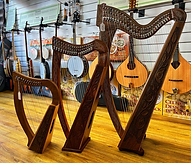
The tradition includes many different types of tunes, including reels (ríleanna), jigs (poirt), hornpipes (cornphíopaí), polkas (polcaí), and slides (sleamhnáin), as well as songs and slow airs. Instruments commonly used in Irish music include the fiddle (fidil), flute (feadóg mhór), tin whistle (feadóg stáin), uilleann pipes (píobaí uilleann), accordion (bosca ceoil/cairdín), concertina (consairtín), banjo (bainseó), harp (cláirseach), and bodhrán.
A central part of Irish music is the session, where musicians gather to play tunes together, share music, and learn from one another. Many musicians learn primarily by ear, allowing tunes to develop their own variations in melody, rhythm, and ornamentation.
Irish music is also deeply connected to dance, language, and storytelling. It has accompanied céilithe, step dancing, sean-nós dancing, and social gatherings for generations, while songs preserve stories of Ireland’s people, history, and everyday life.
Today, Irish traditional music is played throughout Ireland and around the world. New musicians continue to learn old tunes, compose new ones, and contribute their own style to a tradition that remains very much alive.